The latest attempts to find a path to freedom end just as ingloriously as those that failed before. (Stock photo).
The most recent attempts to break free from the reach of the bureaucratic state—to establish an independent, freer, or even truly free society from scratch, whether on open land or the open sea—are ending just as ingloriously as those that failed in the past…
Over the last decade, we have witnessed a wave of ambitious projects promising an end to taxes, regulations, and state oversight—envisioning something akin to a free or non-state society. Yet, when we examine these „islands of freedom“ through the lens of reality as of late 2026, the outcome is devastating.
Older projects have either quietly vanished, gone bankrupt, or dwindled into mere curiosities with no real impact on human freedom.
Nevertheless, new projects continue to emerge. Instead of steel platforms and cruise ships, they now tout blockchain, digital communities, and „network states.“ Yet, only the marketing jargon has changed. The conceptual emptiness and the inevitable path into a dead end remain exactly the same.
A Graveyard of Early Utopias
One need only look back at the projects that, just a few years ago, dominated the headlines of libertarian and tech-focused media. Today, they serve primarily as textbook examples of a clash between naive ideology and harsh reality.
– – – – –
A quintessential symbol of this failure is the „MS Satoshi“ affair. In 2020, a group of crypto-enthusiasts purchased a decommissioned cruise ship, envisioning a floating paradise in the Gulf of Panama—a place free from the reach of state laws.
The project did not even survive its first year. Its creators completely ignored the fact that the open sea is not a legal vacuum, but a domain governed by strict international maritime conventions. The ship failed to obtain the necessary certifications, found no buyers, and ended up being scrapped—an inglorious conclusion.
– – – – –
The „Floating City Project“ in French Polynesia—a seemingly grand and „serious“ endeavor—met a similar fate. Bold, utopian plans for an autonomous floating city within Pacific lagoons ran up against local political resistance to „digital neocolonialism,“ as well as the unyielding realities of physics and economics.
A pseudo-state—or, in effect, a fictional „microstate“—in the middle of the ocean simply cannot withstand corrosion or the force of the waves without investments running into the billions; yet, no one is willing to provide such capital without state guarantees.
Not to mention that the free-thinking organizers operated on the somewhat grandiose assumption that ordinary proponents of freedom would be willing to abandon their conventional lives within civilization in exchange for a bizarre, adventurous game of „freedom“—staged atop untested, precarious structures that risked sinking into the sea…
Even those projects that remained on dry land, or merely „floated“ in the clouds, failed to offer their participants anything remotely resembling genuine freedom.
– – – – –
Asgardia – self-proclaimed as the first „space nation“ – has, by 2026, become nothing more than a forgotten online fan club, boasting over a million registered clicks, its own virtual currency, and zero sovereignty.
A single symbolic satellite—which burned up in the atmosphere long ago—does not, and never will, constitute the creation of an independent, let alone free, „state“ (a concept that is, in fact, an oxymoron).
– – – – –
Meanwhile, Norway’s Liberstad remains little more than a small settlement of cabins for a few dozen enthusiasts. While they may feel a relative sense of internal freedom behind the fences of their private property—especially given that the surrounding area consists of nothing but desolate forest—they are actually paying the organizers for the privilege of participating in this fiction.
Yet, the moment they step onto a public road, or require medical attention or security, they revert to being ordinary, law-abiding subjects of the Kingdom of Norway. They likely fail to realize that fleeing civilization for the “exile” of the Norwegian wilderness—even under the appealing banner of Liberstad—is, in reality, merely playing at freedom.
After all, a castaway-like existence outside the world has nothing in common with life in society. And without society, even the pleasant-sounding tales about supposed freedom are devoid of meaning.
– – – – –
The Indian city of Gurgaon (now Gurugram) feels like a lost myth—a place that was, for years, celebrated (naturally) as proof that private developers could replace the state. Yet, Gurugram did not emerge as an ideological experiment; rather, it was a purely commercial real estate venture driven by major development firms, led by the company DLF.
To their customers—multinational IT corporations and the Indian upper-middle class—the developers did not sell political or civic freedom, but merely functional „comfort“ and protection from a dysfunctional Indian state.
The developers’ core marketing promise was: „Within our complex, you will have 24-hour electricity, clean water, paved roads, waste collection, and armed security—amenities that the corrupt and sluggish Indian state cannot provide.“
Ultimately, the project failed to deliver even the basics taken for granted in the civilized world.
The reality in Gurugram over recent years has shown that the privatization of public space, absent any systemic governance, has led to environmental and infrastructural chaos; behind the gates of luxury residences lie collapsing transport systems, pollution, and dwindling water supplies.
A new wave of „free“ projects: Old mistakes in a digital guise
One might assume that, following an endless series of failures, a sobering realization—and a strategic shift—would follow. Instead, a new generation of false visionaries has sprung up like mushrooms after rain.
They have conveniently dusted off that same old dream of freedom, merely dressing it up in the modern garb of concepts like Web3 (a collective term for a new generation of the internet built on blockchain technology and cryptocurrencies, aiming to operate without central authorities, large corporations, or state oversight), the well-worn notion of decentralization, and so-called „Network States“—as if a „network state“ were somehow superior to a traditional state…
The script is always the same: first, establish an online community; next, issue a proprietary cryptocurrency or token; then, raise funds through crowdfunding; and finally, use that capital to purchase physical land where a new, free civilization can take root.
However, the experience of 2025 and 2026 demonstrates that even this „digital“ approach hits the very same wall.
– – – – –
A textbook example of this failure is „The Network School“, a project by tech investor Balaji Srinivasan. It promised to build a network of physical campuses that would eventually evolve into a new global state.
Yet, when the digital community settled into a half-empty development complex in Malaysia, it collided with the harsh reality of state power. In 2026, Malaysian authorities simply banned the operation of the campus, forcing the project to relocate to Kazakhstan.
It turned out that membership in an online community offers no protection against a single, arbitrary stamp from a low-level local bureaucrat.
– – – – –
The project Cabin (formerly CabinDAO)—which aimed to build a network of autonomous, nature-based settlements through blockchain-based voting—met a similarly lackluster fate. It turned out that decentralized voting by token holders is ineffective at fixing a leaky roof, resolving disputes between neighbors, or funding actual day-to-day operations.
The project abandoned its original model and has since shrunk into a simple accommodation rental service for digital nomads.
– – – – –
And what about Praxis – the project that raised hundreds of millions of dollars to build a free „neo-state“? Instead of establishing a new sovereign territory in the Arctic or the Mediterranean, it has ended up planning a conventional real estate development in Uruguay and California—one where it will have to strictly adhere to local building codes and pay local taxes.
– – – – –
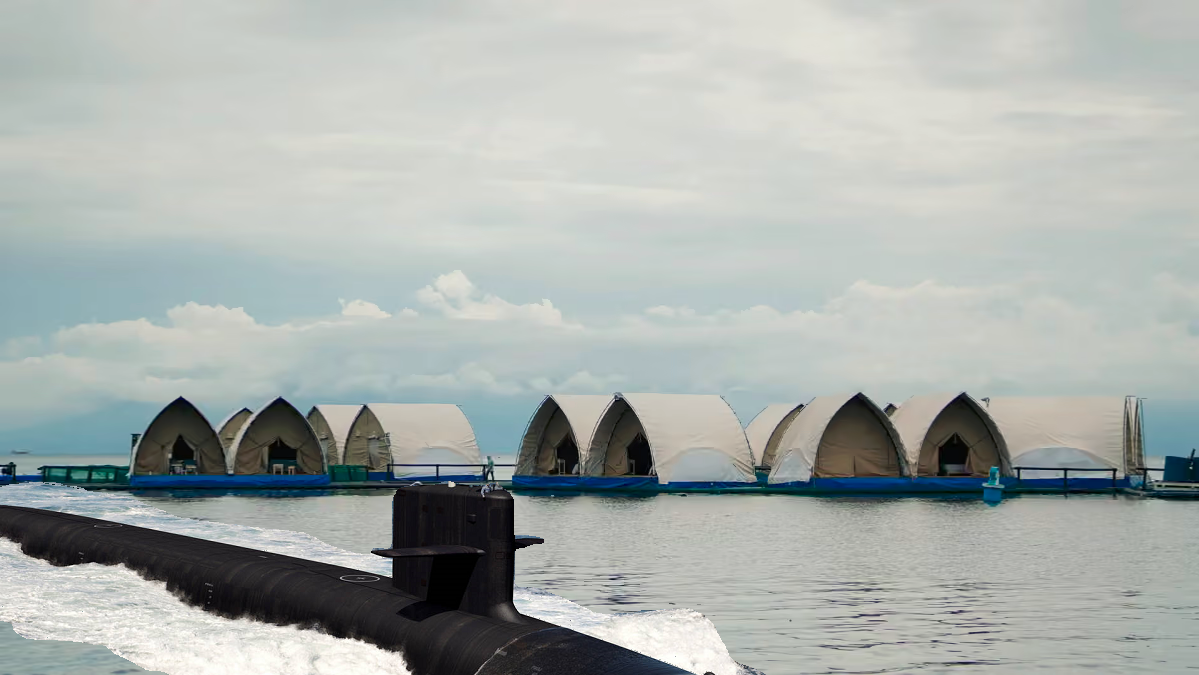
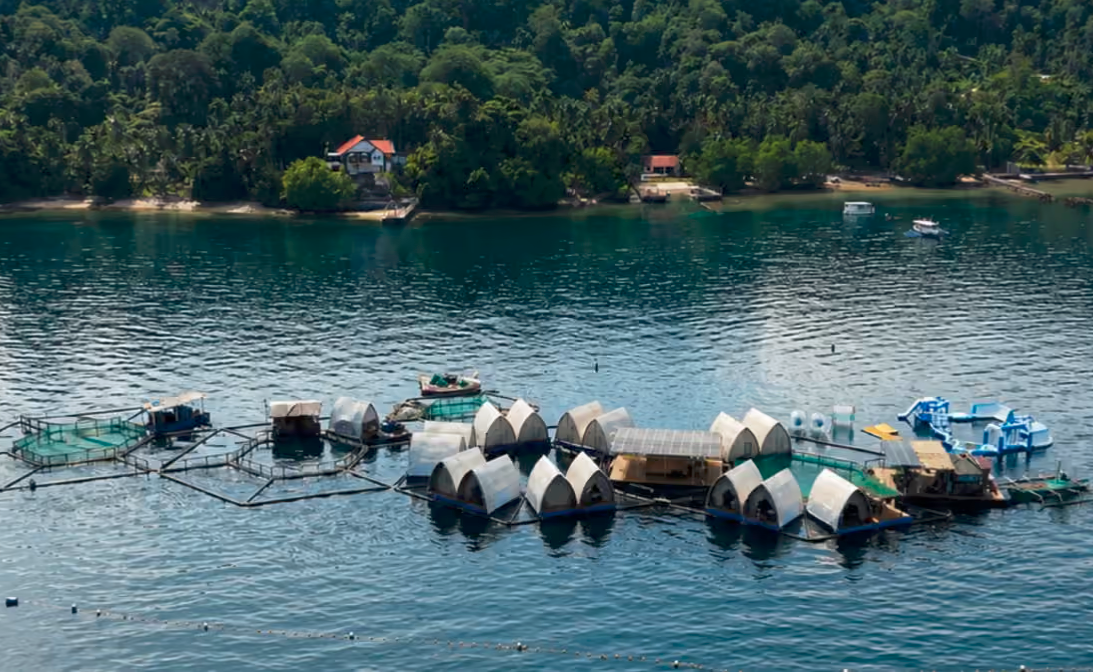
Even new floating projects, such as ArkPad in the Philippines or off the coast of Honduras, have abandoned the pursuit of sovereignty. In practice, they function merely as upscale floating eco-resorts, remaining entirely dependent on the supply chains and legal frameworks of the mainland nation.
Why It Doesn’t Work—and Can’t Work
Whether these projects cloak themselves in 20th-century libertarian philosophy or the latest cryptocurrency terminology, they fail for the very same conceptual reasons:
1. Confusing the real estate business with sovereignty. Purchasing land, a ship, or a hotel does not mean escaping the clutches of the state’s boundless power. As long as the land or territorial waters belong to an existing state, you remain merely a tenant or a taxpayer.
The state holds a monopoly on the legitimate use of force; the moment such an enclave attempts to truly declare independence, the police, the military, or the tax authorities will intervene.
2. The illusion of a society based on contracts. The founders of these projects believe that complex human society can be governed solely through private agreements or blockchain-based smart contracts. This concept collapses entirely when a serious crime occurs, when a new generation is born that never signed any such contract, or when external threats must be addressed.
3. Ignoring the costs of civilization. Modern society rests upon a vast, expensive, and centralized infrastructure—ranging from energy grids and sewage systems to the judiciary. Small, isolated communities cannot afford to build or maintain these systems on their own; consequently, they inevitably end up as silent „free riders“ on the surrounding state.
Thus, these latest „modernized“ attempts to find a „path to freedom“ do not, in reality, deliver any freedom at all.
They are merely an expensive escape for a narrow group of tech elites who have mistaken a digital community for the real world, and real estate speculation for true freedom—the meaning or essence of which they either fail to grasp entirely or exploit solely for commercial gain.
The true fight for freedom cannot be won by fleeing to a floating pontoon or purchasing a cryptocurrency token.
An overview of so-called „pro-freedom“ projects and the reality behind them (as of November 2026)
Earlier projects
MS Satoshi (2020–2021)
A cruise ship purchased to serve as a floating „crypto-paradise“ in the Gulf of Panama. The project foundered due to strict international maritime regulations and a lack of interest; the ship ultimately ended up as scrap.
The Floating City Project (2017–2018)
A plan for autonomous floating islands in the lagoons of French Polynesia. It collapsed due to opposition from the local political establishment and the prohibitive costs of building resilient maritime infrastructure.
Asgardia (since 2016)
A self-proclaimed „first space nation,“ boasting over a million online registrations. Lacking its own territory or international recognition, it is essentially nothing more than a virtual club with zero impact on actual freedom.
Liberstad (since 2017)
A private anarcho-capitalist settlement in southern Norway, home to a few dozen residents. It functions merely as a small colony of cabins, entirely dependent on the surrounding state infrastructure and the legal framework of Norway.
Gurgaon / Gurugram (India)
A city built by private developers, lacking a traditional municipal administration. Far from creating a libertarian paradise, the privatization of public space has led to traffic gridlock, water shortages, and extreme social inequality.
A New Wave of Projects (2024–2026)
The Network School
A project by Balaji Srinivasan aimed at transforming online communities into physical campuses. In 2026, authorities simply banned its first branch in Malaysia, forcing the project to relocate to Kazakhstan.
Cabin (formerly CabinDAO)
An attempt to build a decentralized network of settlements governed by blockchain-based voting. Due to inefficiencies and high costs, the model collapsed, and the project evolved into a standard accommodation rental service for digital nomads.
Praxis
A project backed by hundreds of millions of dollars, intended to establish a libertarian „neostate.“ Instead of creating a new sovereign territory, it ended up planning a conventional real estate development subject to the laws of Uruguay and the United States.
ArkPad
Modular, floating communities in the Philippines and off the coast of Honduras, funded via cryptocurrency. In practice, rather than independent states, these are merely commercial floating eco-resorts that remain dependent on the mainland.