Mises Institute excommunicates world libertarian guru Hans-Hermann Hoppe.
An explosive, tectonic shift has occurred within the libertarian movement, fundamentally redrawing the map of radical economic and political thought. Hans-Hermann Hoppe, the world-renowned philosopher, economist, and key disciple of Murray Rothbard, has definitively ended his more than forty-year association with the American Mises Institute (MI).
The institution, for which Hoppe served as the primary intellectual icon for decades and as its sole holder of the prestigious title „Distinguished Senior Fellow,“ coldly excommunicated him via a terse email following his sharp intra-institutional criticism. This separation—accompanied by staff purges, allegations of commercial degeneration, and a loss of moral compass—signals the end of an era for the libertarian movement.
The catalyst for the final collision was a pair of pivotal texts titled „Mises Institute: Quo Vadis?“ and a subsequent postscript, which Hoppe published. In these writings, he subjected the institute to an uncompromising, scathing critique.
Hoppe’s Critique
Hoppe outlined his arguments regarding why the institution has lost its „soul“ into three primary points:
Commercial Degeneration and the Chasing of Money: First and foremost, Hoppe pointed out the institute’s commercial decline.
He accused the current leadership of MI of turning an academic institution into a mere corporate fundraising machine. He criticized the construction of unnecessarily luxurious and expensive facilities at the headquarters in Auburn, as well as the artificial bloating of the administrative apparatus.
According to Hoppe, management prioritizes the quantity of financial donations over the quality of ideas, leading to a dilution of the original radical message so as not to „offend“ mainstream donors.
The Rift Over Argentina’s „Messiah“
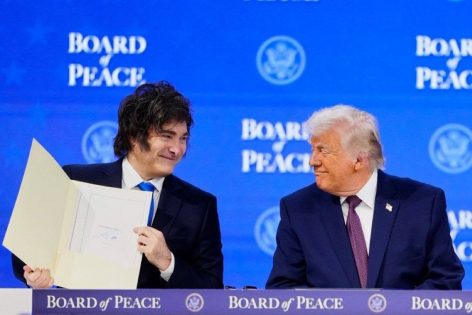
A key turning point that sealed Hoppe’s rupture with the Mises Institute was a radical ideological clash over the assessment of Argentine President Javier Milei. While the institute’s leadership celebrated Milei as the „Messiah of anarcho-capitalism,“ Hoppe pulled no punches in his text “Mises Institute: Quo Vadis?”.
Hoppe directly wrote that Milei had actually turned out to be a “highly dubious character, a fake libertarian, crook and warmonger.”
According to Hoppe, MI’s uncritical embrace of Milei was clear evidence that the institute had traded uncompromising libertarian principles for cheap, mainstream populism.
Staff Purges and a Palace Coup
Furthermore, Hoppe highlighted staff purges and a palace coup within the institute. According to him, key thinkers who formed the intellectual core of the organization have been marginalized. He specifically mentioned the sidelining of long-time Academic Vice President Joseph Salerno and key reviewer and intellectual David Gordon.
Hoppe described this process as a „palace coup“ executed by the administrative wing to eliminate the influence of old-school Rothbardian academics.
Intellectual Sterility
Alongside these points, Hoppe addressed the intellectual sterility of the institute. As a radical paleolibertarian, Hoppe rebuked the institute for a loss of courage. Instead of leading the charge in revisionist history, radical decentralization, and an uncompromising critique of the state, MI has, in his view, retreated into safe, academically dull, and politically correct theorizing simply to appeal to the broader public at the expense of truth.

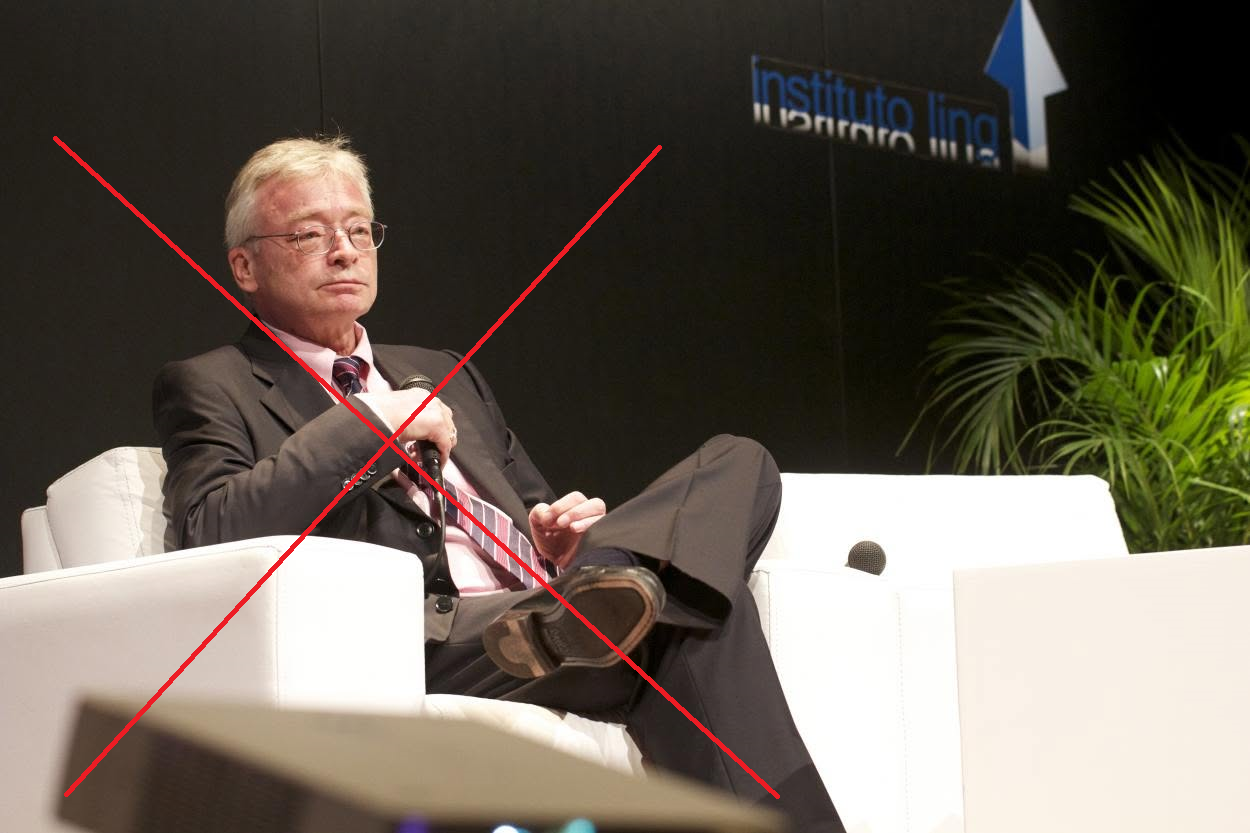
Hans Herman Hoppe.
Email Dismissal and Lew Rockwell in the Background
In response to the publication of „Quo Vadis?“, the Mises Institute’s executive management sent Hoppe an official email. The message bluntly informed him that his title of Distinguished Senior Fellow was being revoked with immediate effect.
In his texts, Hoppe suggested that the institute’s founder, Lew Rockwell—who has celebrated his 80th birthday and faces health challenges—has likely lost real control over the organization and was essentially bypassed by an „internal cabal“ of management.
Hoppe noted that when he and attorney Stephan Kinsella previously sent internal memoranda and complaints regarding internal conditions and earlier purges (such as the departure of Tom DiLorenzo), Rockwell failed to respond entirely. Donors merely received a generic, pre-signed letter from Rockwell lacking any real explanation.
The institute’s leadership subsequently opted for the time-tested corporate tactic of playing dead—refusing to lower themselves to a public debate or issue any official statement. Instead, they continue their marketing and fundraising efforts, paradoxically still leveraging the name of Murray Rothbard to solicit contributions from donors.
An Unyielding Legacy
Hoppe reacted to the email dismissal with characteristic grace. He requested attorney Stephan Kinsella to post the Latin motto on the internet that served as the lifelong creed of Ludwig von Mises: „Do not give in to evil, but proceed ever more boldly against it!“
„Tu ne cede malis, sed contra audentior ito!“
(Do not give in to evil, but proceed ever more boldly against it!)
The rift with the American headquarters has also reverberated in Europe, where Hoppe, following these events (and earlier disagreements in 2025), definitively left the advisory board of the German Mises Institute.
The case clearly illustrates how a formerly radical vanguard has transformed into a bureaucratic apparatus that resolves internal criticism not through academic discussion, but with an administrative stroke of a pen. The radical line and the intellectual torch of uncompromising libertarianism are now definitively being taken up by other platforms, such as Hoppe’s own Property and Freedom Society (PFS) and Rothbard Brasil.
The Mises Institute is named after the famous Austrian School economist Ludwig von Mises.