The Liberstad Project in the Norwegian Forests Brought No Freedom, Only a Failed Escape from the State and Society.
The Liberstad Project in the Norwegian Forests Brought No Freedom, Only a Failed Escape from the State and Society. The private city project Liberstad in southern Norway has long been celebrated in libertarian circles as a bold experiment and the seed of a free society. However, the reality of recent years – including the collapse of its original development plans in 2025 and its subsequent ideological mutation into a „church“ in 2026 – reveals a harsh truth: it was never about building a new society, but merely an escape into voluntary exile that did not reduce state aggression by a single inch.
Grandiose Plans: Sketching a Private Utopia in a Norwegian Forest
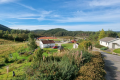
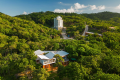
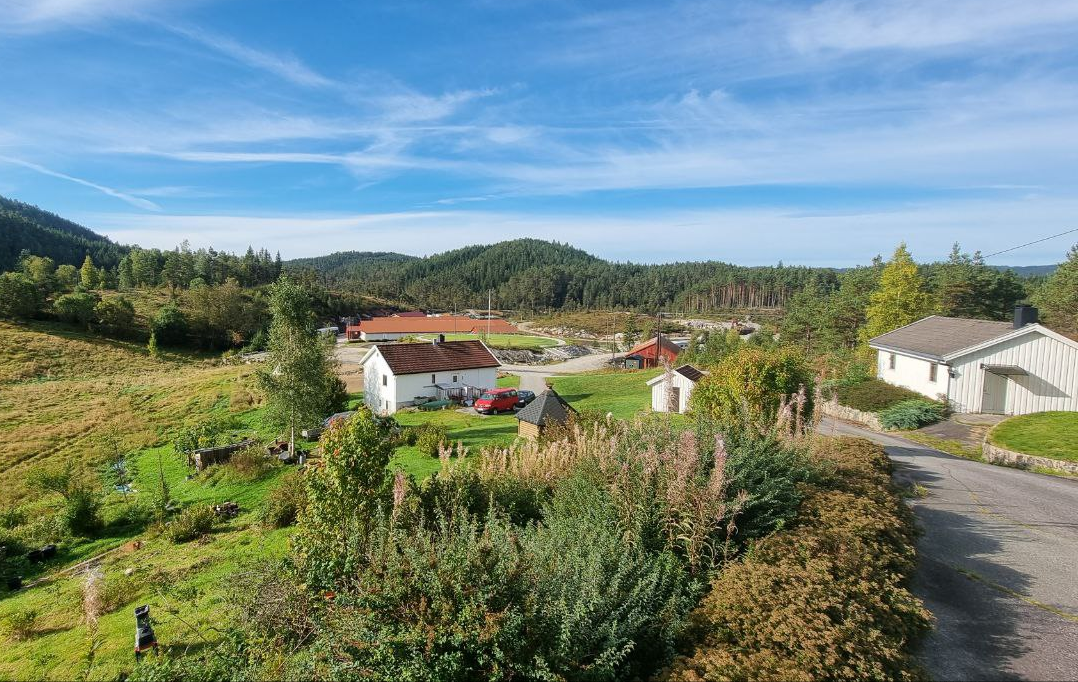
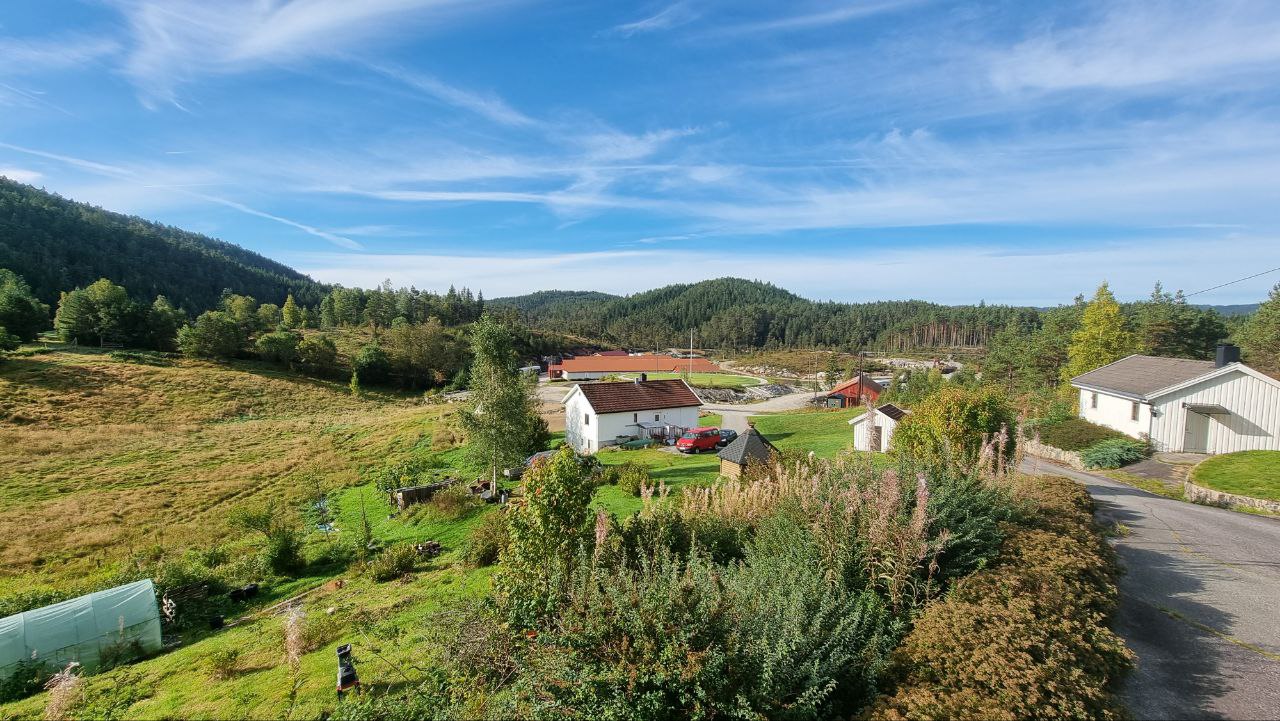
The roots of the Liberstad project date back to 2015–2017, when Norwegian founders John Toralf Holmesland and Sondre Bjellås established the company Liberstad Drift AS and purchased roughly 150 hectares (1,500 decares) of forests, pastures, and farmland at the remote Tjelland gård estate in southern Norway’s Agder region (now part of Lindesnes municipality).
The founders‘ ambitions were far from modest – their stated goal was to build the world’s first modern private city founded on strict respect for property rights, voluntary cooperation, and the non-aggression principle (NAP).
Original blueprints and promotional materials promised a fully fledged, self-sustaining community complete with residential neighborhoods, recreational zones, schools, a business incubator, and private infrastructure.
All public goods people typically rely on state municipalities to provide – from road maintenance and security to dispute resolution – were to be supplied exclusively on a free-market basis by private firms via voluntary contracts.
The project renounced all politicians, elections, public offices, and taxes; shared costs were to be covered solely by voluntary contributions.
The concept also envisioned ambitious economic independence. In 2019, the project adopted its own cryptocurrency, City Coin (later replaced by an internal accounting unit called Libra), as its official currency and began building its own land registry and digital contract system outside the reach of state records.
However, Norwegian zoning laws forced compromises from the very beginning: because land designated for permanent residence in Norway carries a legal residency requirement (boplikt), Liberstad had to be formally conceived merely as a „recreational cabin town,“ where this obligation does not apply.
Even so, the vision captivated hundreds of idealists—by 2018, 108 people from 28 countries had pre-purchased plots at prices ranging from 35,000 to 75,000 Norwegian kroner per 1,000-square-meter plot.
The Quiet Crash of 2025: The End of the Development Dream Under Threat of Fines
While libertarian conferences and social media kept alive the image of Liberstad as a thriving beacon of liberty, the project was heading into a dead end deep in the Norwegian woods.
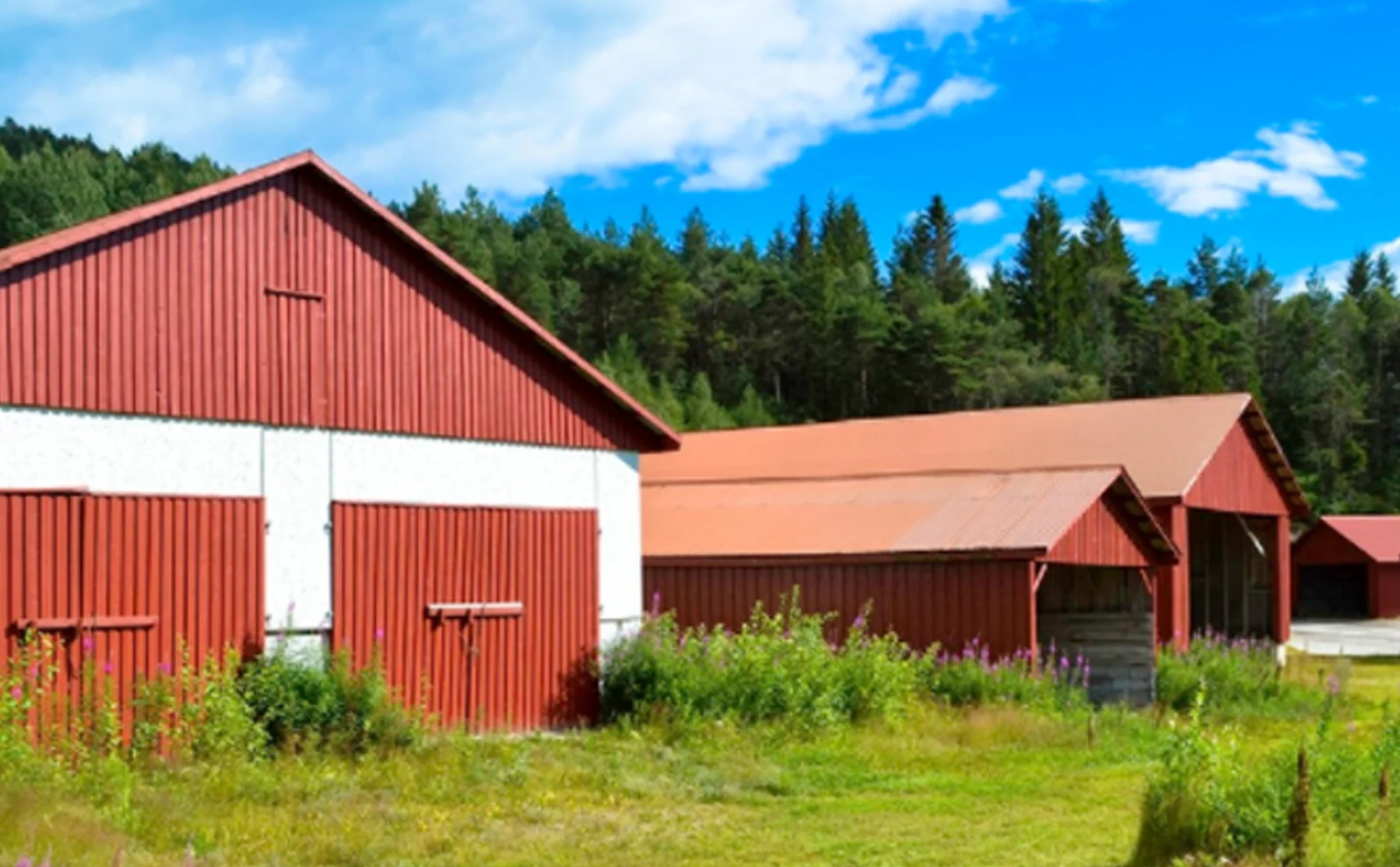
After years of building a community center, workshops, summer camps, and makeshift structures, the founders hit an impenetrable wall of Norwegian bureaucracy.
The local municipal government (Lindesnes kommune) repeatedly cited serious violations of building and zoning laws, particularly due to unauthorized earthworks, construction without an approved zoning plan, and missing permits.
In May 2025, a turning point occurred that went largely unnoticed by the broader libertarian public—the organizers have long avoided communicating with mainstream media and refrained from broadcasting the crisis across their international promotional channels.
In May 2025, the operating company Liberstad Drift AS quietly announced the termination of the original private city project.
The stated reasons were insurmountable practical and financial obstacles, the lack of a valid zoning permit, and above all, the immediate threat of draconian daily coercive fines (tvangsmulkt) from the municipality for unauthorized alterations to the landscape.
Founder John Toralf Holmesland was forced to admit that the necessary applications had not been submitted on time and announced that the land would be returned to its original purpose—small-scale agriculture and forestry.
The grand urbanist dream of a private city meant to rival state metropolises thus ended in capitulation to a single municipal building authority.
…Liberstad…
The Red-Hot Present: From a Free City to a „Church“ and a Pay-to-Join Cult
Rather than openly admitting defeat and a flawed strategy following the 2025 construction collapse, the organizers opted in 2026 for a retreat into pure abstraction and pseudo-religious rhetoric. On its website today, Liberstad presents itself as a „parallel society,“ yet instead of real urban neighborhoods, it sells entry tickets into a closed ideological club.
Every applicant must pass an approval process, pay a one-time fee of 1,000 Norwegian kroner to be issued an internal FreeID card, and pay annual membership dues.
An even more consequential – and from the perspective of defending liberty, downright fatal – shift came in February 2026, when the founders officially established the so-called Church of Voluntaryism (Frivillistkirken).
The founders justify this move by claiming that voluntaryism cannot remain merely a political or economic philosophy, but must become a „spiritual foundation of natural law,“ a „sacred covenant,“ and a „religion without gods or masters,“ complete with its own rituals and symbols.
For the idea of a free society, this represents a deeply degrading departure.
Transforming a rational, legal, and economic concept of liberty into a religious denomination plays directly into the hands of every critic of libertarianism and sends a destructive message to the world: that a free society is not a rational, universal arrangement for ordinary people, but an eccentric affair reserved for insular religious cults and sects.
Instead of dismantling state power, the project has degenerated into creating symbolic uniforms, its own FreeID identity cards, and a quasi-ecclesiastical hierarchy that merely parodies the very state it was originally meant to escape.
Freedom Analysis: Norwegian Laws Apply on Every Square Meter
From the standpoint of an honest analysis of freedom—understanding freedom as a condition inversely proportional to the degree of state coercion, institutional aggression, and other forms of aggression—one fundamental question must be asked: What has the project actually delivered to its participants?
The answer is uncompromising: Nothing at all.
Liberstad has never been a sovereign territory, nor a duty-free or tax-free zone. On every square meter of this Norwegian forest, from day one until today, Norwegian laws, building codes, regulations, and tax obligations apply in full.
- Zero elimination of aggression: Participants have not rid themselves of a single element of aggression, and by extension, state coercion. The Norwegian state continues to hold a complete monopoly on violence, the judiciary, and taxation (including municipal property taxes).
- Total subordination to authorities: The moment residents attempted to landscape the terrain or build according to their own „voluntary“ rules without state approval, they were met with the threat of seizures and fines, to which they unconditionally capitulated in 2025.
- The paradox of financing: Even today’s fees for the „liberated“ FreeID identity are collected in Norwegian kroner (NOK) through standard banking and payment systems, rather than the proclaimed free currencies.
The notion that buying a plot of land in one of the most heavily regulated and highest-taxed countries in the world (Norway) would create an island of liberty has proven to be pure illusion. The state apparatus simply guarded its territory.
Escaping Society Is Not Building a Free Society
However, the fundamental flaw of the Liberstad project does not lie merely in underestimating the power of Norwegian authorities. Its failure runs much deeper and is encoded in the very nature of the enterprise.
Participants fled the cities into a dense, remote Norwegian forest in the naive hope that by physically distancing themselves from centers of power, they would rid themselves of the state and gain freedom.
That is not how freedom is born. The Liberstad project failed to create a free or freer society for one simple reason: it is not about creating a society at all.
A real human society is a complex, living organism built on an intricate division of labor, trade, mutual ties, and social interaction among millions of people. By contrast, Liberstad is in its essence an escape from society and a retreat from society.
- Voluntary exile: Isolating a few dozen like-minded individuals in the Nordic wilderness is not the birth of a new civilization, but a flight from civilization into voluntary exile.
- Resignation from reality: A freer society will not emerge from a handful of malcontents hiding in the woods, founding their own „church,“ and playing state with FreeID cards while the rest of the world—including the forest itself—remains firmly in the grip of the state.
- Where there is no society, there can be no free society: Society cannot be built by severing ties with civilization in forest solitude, where the sole outcome after a decade is a return to small-scale farming under the watchful eye of a municipal office and collecting admission fees for a virtual cult.
A free society does not grow in a dense forest
Liberstad serves as a valuable lesson for all advocates of liberty. It demonstrates that the state cannot be outsmarted by buying a patch of woodland or founding a virtual church.
As long as the mechanism of state coercion and institutional aggression remains intact, any „island of freedom“ within a state remains nothing more than a temporary stage set that a bureaucrat can dismantle with a single stamp.
The real struggle for freedom must take place inside civilization and society—fleeing into the woods, followed by a retreat into religious mysticism, is either just failed marketing or a deliberate exploitation of the cause of human liberty.